Most home cooks blame their equipment. They assume proper chips need a commercial fryer, a basket, a dial for the temperature and a kitchen that smells of beef dripping at midnight. What they actually need is a floury potato, a pan of simmering water, twenty minutes of doing not very much, and two short trips into hot oil. The fryer is optional. The method is not.
Get three things right — parboiling, drying and double-frying — and you will get chips with a fluffy, slightly grainy middle and a shell that shatters instead of bending. Here is the whole thing, start to finish, in an ordinary kitchen with an ordinary pan.
Start with the right potato
Almost every disappointing batch of home chips begins at the supermarket. Waxy potatoes, the ones that hold their shape in a salad, turn glassy, dense and greasy when fried. You want floury, high-starch potatoes that are halfway to falling apart before they ever meet the oil.
- Good choices: Maris Piper, King Edward, Rooster, Desiree, Russet, Estima.
- Avoid: Charlotte, Nicola, Jersey Royals, and anything sold as a salad or new potato.
- Size: long, large potatoes give you proper long chips. Small ones give you stubs and a lot of waste.
Cut them into batons roughly 1.5–2cm thick. That is a chunky chip, not a fry. What matters most is that they are all about the same size, because a mix of thick and thin means some chips are raw in the middle while others are already catching at the edges. If you want shoestring fries, cut them thinner and shorten every cooking time below.
Rinse the cut chips in cold water for ten minutes, until the water stops looking milky. That washes off surface starch, which otherwise glues the chips together in the pan and makes the oil foam.
Parboil first — this is where the fluff comes from
Raw potato dropped into hot oil is a hard, watery block. Cooking it through in water first softens the inside and roughs up the outside, and those roughed-up edges are what turn into the crisp, bubbled crust later. Skip this and you get chips that are either pale and limp, or burnt outside and chalky within.
Put the chips in a wide pan, cover with cold water, add a good pinch of salt and bring to a gentle simmer. Not a rolling boil — a hard boil knocks the edges off and leaves you with broken chips and potato sludge. Simmer for five to eight minutes, depending on how thick you cut them.
How to tell they are ready: lift one out. The outside should look slightly translucent and a little frayed, and a knife should slide in with some resistance still in the middle. If it goes in like butter, they are overcooked and will collapse. If it stops halfway, give them another minute.
A tablespoon of vinegar in the water helps the outsides hold together without going mushy. When they are done, drain them in a colander and leave them there for five minutes to steam themselves dry. Do not rinse them again.
Drying is the whole trick
If you take one thing from this, take this: wet chips never crisp. Every drop of water on the surface has to be boiled off by the oil before the crust can even begin to form, and that steam is what leaves you with flabby, greasy chips that go soft the moment they hit the plate.
So drain them, then spread them out in a single layer on a wire rack over a baking tray. Kitchen paper is fine for the first minute, but move them off it quickly — paper traps steam underneath, which is the opposite of what you want. Give them twenty to thirty minutes at room temperature, or longer.
A cold, dry chip is a good thing. Chill them uncovered in the fridge for an hour if you have the time, because cold chips take on less oil and crisp faster. If they look damp and shiny, wait. If they look dry and faintly chalky at the edges, they are ready.
The double fry, explained
Two trips into the oil do two different jobs. The first, at a low temperature, cooks the inside through without colouring the outside. The second, at a high temperature, drives off the last of the moisture and builds the crust. Skip either one and you will taste the difference.
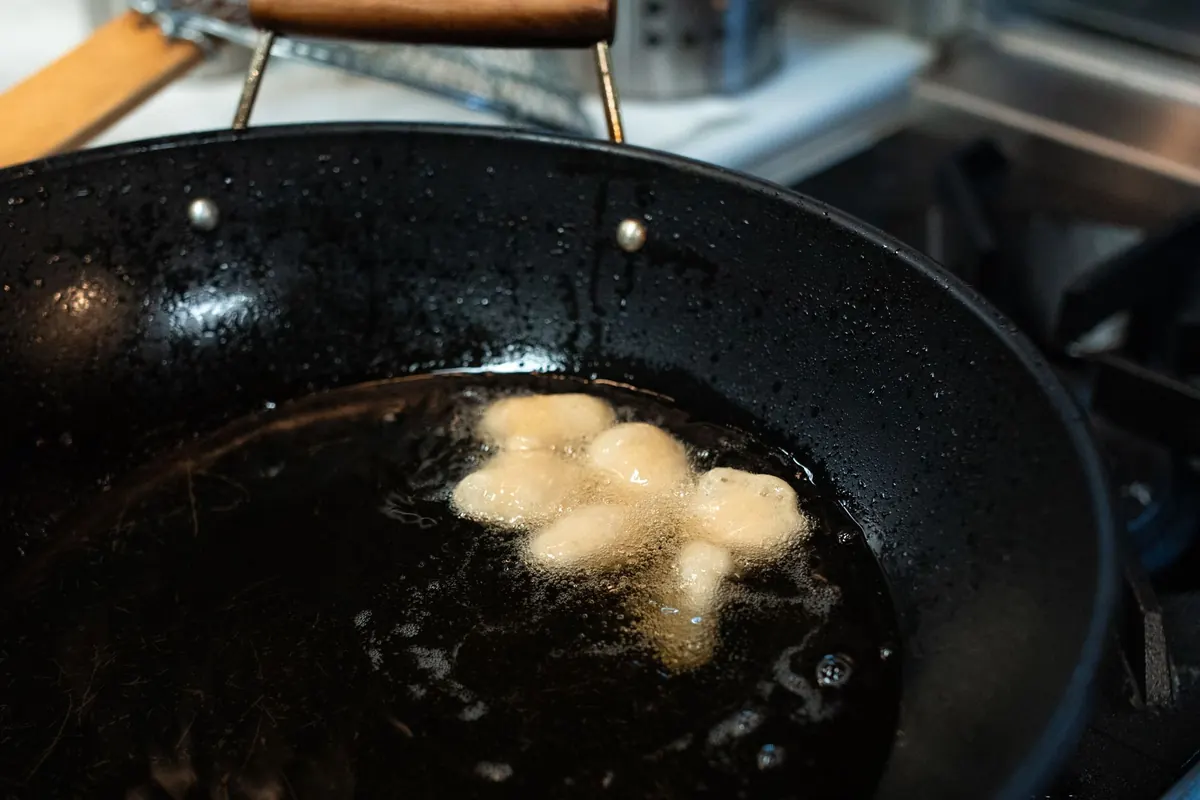
For oil, use something neutral with a high smoke point: sunflower, rapeseed or groundnut. Olive oil is wasted here and will start to taste of itself. Use a deep, heavy saucepan or a wok, and never fill it more than a third full — the oil rises when the chips go in, and it rises further if anything is wet.
First fry: low and slow
Heat the oil to around 130–140°C. No thermometer? Drop in a cube of bread: it should sink, then take roughly forty to sixty seconds to brown and float. If it hisses and colours immediately, the oil is too hot — take the pan off the heat and let it come down.
Fry in small batches so the temperature does not crash, for five to eight minutes,
Photo: RDNE Stock project / Pexels